
Community Resilience at Cactus
Growing community resilience through learning, connection, and continuity
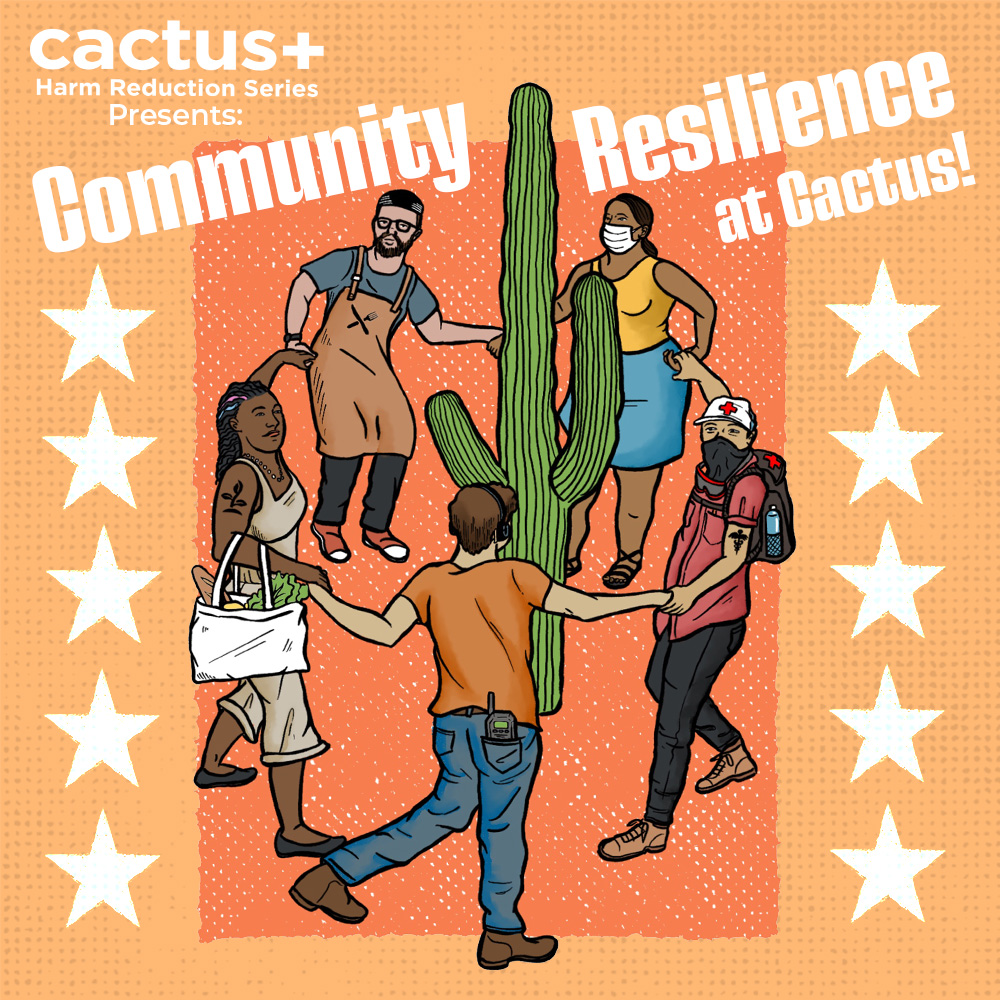
Join Community Resilience at Cactus!
Read about CRC in Shepherd Express!
🌵 Community Resilience at Cactus is a volunteer association started in 2025 that is built on three pillars:
- 📖 Learning – Practical demonstrations, hands-on training and short publications designed to grow community resilience knowledge, skills and experience.
- 🪢 Connection – Building a network of local volunteers, community leaders and experts who will strengthen community and inter-community resilience.
- 🛞 Continuity – Maintaining and supporting volunteer networks over time with fun events and continuous engagement to keep resilience skills sharp and at the ready.
🌵 Community Resilience at Cactus features four groups focused on:
- 10-4 Good Buddy! – Community Powered Communications
- Cactus Cultivation Community – Community Gardening and Urban Agriculture Club
- Sawbones! – First Aid Training and Community Health Volunteers
- Solidarity Supper Club – Free Community Meals and Mutual Aid
Each group will grow community resilience skills, support community resilience outreach projects, and develop a network of volunteers who can respond to a broad range of community needs.
Email contact: crc@cactusplus.org
Community Resilience at Cactus Groups
🔸 10-4 Good Buddy! – Community Powered Communications
- Coordinator: Joe K.
- Learning and Demonstration Topics
- Walkie-Talkies – FRS and GMRS radio communications
- LoRa / Meshtastic – Community based secure digital messaging
- HAM Radios – Long distance radio communications
- Digital Radio – Sensing Digital Signals in the Airwaves
- ‘Zines and Sign Printing
- Risograph printing
- Cyber-Security Workshop – Secure your phone and data
- Community Projects
- Building a resilient and reliable Meshtastic network in Milwaukee
- Leading the Community Resilience at Cactus ‘Zine series
- Leading a Communications Design Volunteer Group to support other community resilience projects.
🔸 Cactus Cultivation Community – Community Gardening and Urban Agriculture Club
- Coordinator: Rachel S.
- Learning and Demonstration Topics
- Seed Saving and Sowing/ Vegetative Propagation
- Canning and Food Storage
- Ethical Foraging
- Food Waste Mitigation Techniques
- Community Projects
- Cactus Community Garden Beds
- Growing Food for Community and Mutual Aid
- Free Food Fridge / Pantry at Cactus Club
🔸 Sawbones – First Aid Training and Community Health Volunteers
- Learning and Demonstration Topics
- Basic First Aid Training
- Creating a Medical Kit
- Learning and Demonstration Topics
- Community Projects
- Blood Drives
- Community Health and Disease Prevention
- Volunteer Medic Corps
- Community Projects
🔸 Solidarity Supper Club – Free Community Meals and Mutual Aid
- Meal Program
- Free vegan community meal supported by volunteers, donations of pantry staples, local garden bounty, and financial donations.
- Community Projects
- Food drives and mutual-aid support for Milwaukee food banks and kitchens
- Exploration and demonstration of alternative / efficient cooking methods like solar cooking or pit roasting.
- Food prep and delivery volunteer group to support other local groups like food-not-bombs, Sauce MKE and others.
- Meal Program
Community Resilience at Cactus Zine Library
- Each CRC Club will produce a short ‘zine outlining the key information provided in their quarterly learning demonstrations.
What is Community Resilience?
Community resilience refers to a community’s capacity to prepare for, withstand, adapt to, and recover from various disruptions and challenges. It involves leveraging available resources, strengthening social connections, and developing sustainable strategies to face adversity. [1, 2, 3]
Here’s a more detailed explanation: [1, 4]
- Prepare: This includes proactive measures like disaster preparedness, risk assessments, and developing emergency plans. [1, 4]
- Withstand: This involves the ability to absorb the initial impact of a crisis, such as a natural disaster or economic downturn, minimizing damage and loss. [2, 4]
- Adapt: This refers to the ability to adjust and change in response to ongoing challenges, developing new strategies and practices to address evolving situations. [2, 4]
- Recover: This is the process of returning to normal functioning and addressing the long-term impacts of the disruption, including physical, social, and economic recovery. [2, 4]
Key elements of community resilience include: [5]
- Strong social connections: A sense of community and mutual support, where individuals and groups help each other. [5]
- Access to resources: Having the necessary infrastructure, supplies, and support systems to respond to and recover from crises. [2]
- Strong leadership: Effective leadership at all levels, both formal and informal, to guide decision-making and coordination. [6]
- Public health and healthcare: A robust system to protect and promote the health and well-being of the community. [7]
- Economic stability: Diversified and resilient economic structures that can withstand shocks and provide opportunities for recovery. [2]
In essence, community resilience is about creating a strong and adaptable society that can thrive even in the face of significant challenges. [4, 7]
[1] https://www.nist.gov/community-resilience
[2] https://en.wikipedia.org/wiki/Community_resilience
[3] https://aspr.hhs.gov/at-risk/Pages/community_resilience.aspx
[4] https://urbanfootprint.com/community-resilience-meaning/
[5] https://www.newamerica.org/resilient-communities/about/principles-resilient-communities-program/
[6] https://pmc.ncbi.nlm.nih.gov/articles/PMC5693357/
[7] https://www.naccho.org/programs/public-health-preparedness/community-resilience